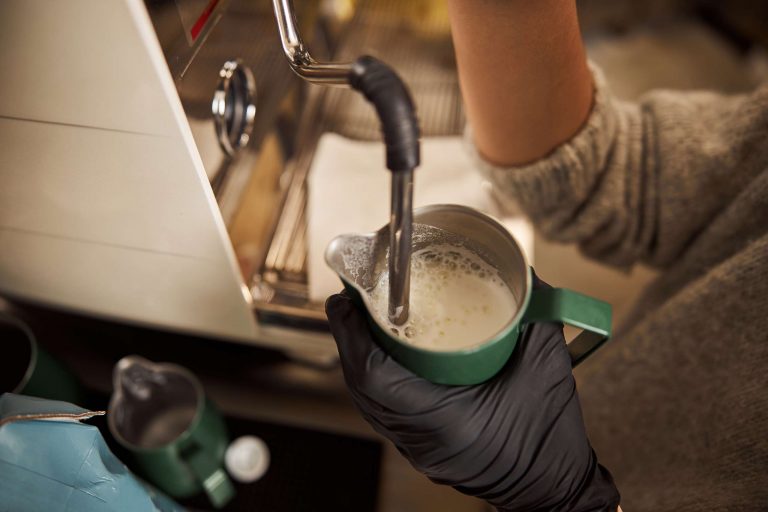

Steaming milk can make a shot of espresso into a delicious cappuccino or latte, but for many new baristas, it is more intimidating than pulling a shot of espresso. The objective of steaming milk is not just to heat it up, but to create microfoam: a smooth, creamy texture in which the bubbles are so small they blend into the rest of the liquid. When this happens, the milk will look shiny and flow easily into a cup. Steaming milk is all about finding the right balance between air and heat, and this one skill will get you through almost every milk-based drink on the menu.
To start, fill a small pitcher about half way with cold milk, just up to the spout. Place the steam wand just below the surface and engage the steam. You will hear a slight hissing noise as a bit of air gets into the milk. Hold the pitcher there for a few seconds, until the hissing stops. Then lower the pitcher a bit so the steam wand is submerged deeper into the milk. You are not trying to get more air in at this point, you are trying to create movement. The milk should be spinning around in a little whirlpool. This motion will incorporate the foam into the milk, creating a smooth texture and preventing big bubbles from forming.
One of the most common mistakes is aerating too much in the beginning. You end up with a big head of foam that looks beautiful, but tastes stiff and dry when you pour it. This happens when you leave the wand too close to the surface for too long. The solution is simple: less is more. You only want a second or two of aerating before you submerge the wand and polish the milk. If you see big bubbles forming in your milk, don’t panic! Just bang the pitcher gently on the counter to pop the bubbles and swirl the milk around before you pour.
It only takes a few minutes to practice texturing milk. Take 15 minutes to practice in 30 second to one minute increments. Start with just one pitcher and focus only on getting that whirlpool going. Pour the milk out and try again, paying attention to the sound of the air going in, and the sound of the milk heating up. After a few tries, practice with an espresso shot. Watch the way the milk pours into the cup. The surface should still be smooth and shiny, not foamy.
As you get better at texturing, pouring gets more creative. You can make designs in the espresso, but still have a balanced drink. The difference in taste when the milk is textured correctly will surprise you. Soon you will be able to tell by the feeling of the pitcher and the sound of the wand if your milk is getting too hot or not hot enough, and you will be pouring a better shot every time.